
Geological Overview
The Petroleum Geological Atlas (Geo-Atlas) provides an integrated, high-level summary of Suriname’s petroleum geology within the broader Guiana Basin.
For a deeper look into Suriname's offshore basin geology, including exploration history, basin evolution, stratigraphy, petroleum system elements, play concepts and hydrocarbon potential, we invite you to explore our Petroleum Geological Atlas Geo Atlas
Summary
Suriname is part of the Guiana Basin, situated on the northeastern edge of South America. It is home to three onshore oil fields that have been producing since 1982, with over 1 billion barrels of oil already recovered. The several recent deepwater oil and gas discoveries along the Golden Lane, the GranMorgu oil development in Block 58, and promising oil and gas projects in sight, are positioning Suriname as a key player in the global oil and gas development.
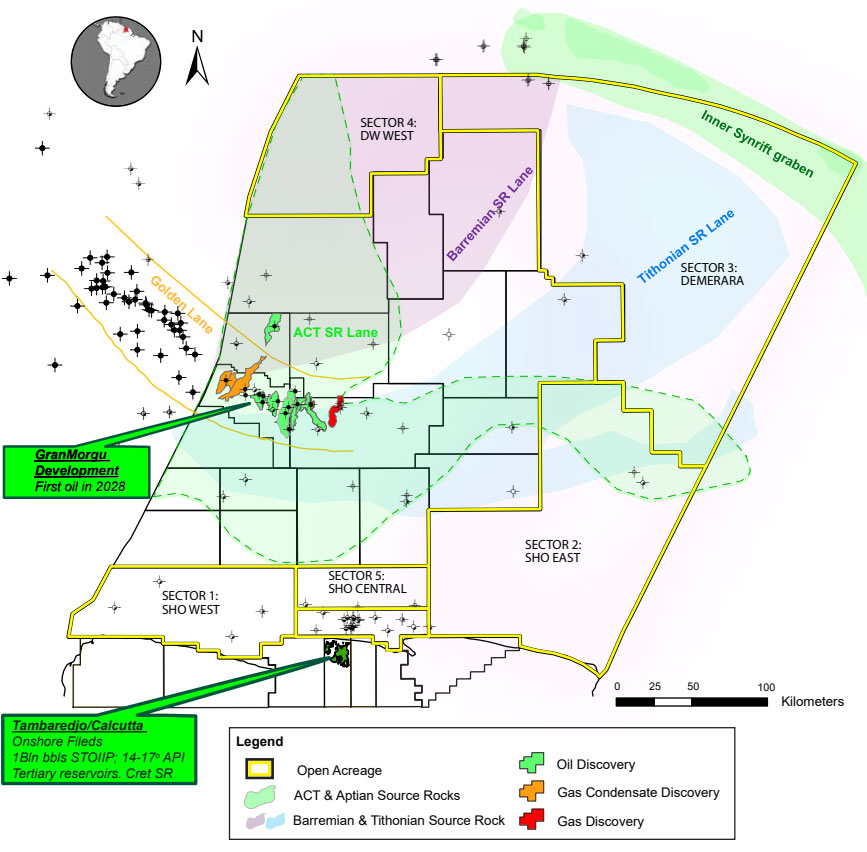
Figure 1: Geological map highlghting source rocks
Click to see full resolution image
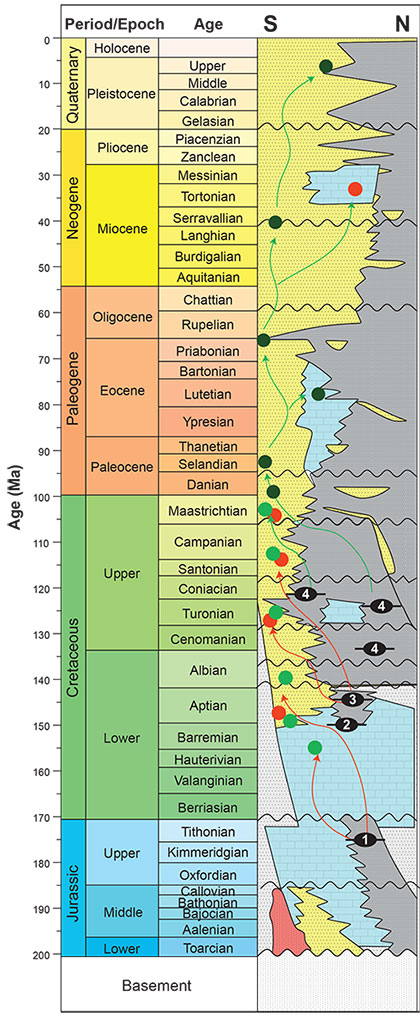
Figure 2: Stratigraphic column of the Guiana basin
Click to see full resolution image
Hydrocarbon generation and expulsion in the Guiana basin are attributed to multiple petroleum systems, ranging from the proven Albian-Cenomanian-Turonian (ACT) and Late Aptian source rocks to unproven Early Cretaceous and Jurassic source rocks.
Among these, the ACT source rock is the primary contributor to the onshore producing fields and the recent hydrocarbon discoveries in the Offshore. Emerging evidence of a deeper, Early Cretaceous and Jurassic petroleum system has significantly increased the potential for hydrocarbon accumulations beyond the so-called "Golden Lane".
Recent petroleum system modelling suggests that a substantial volume of hydrocarbons remains trapped and undiscovered in Offshore Suriname.
The basin contains various petroleum plays across multiple stratigraphic intervals, which is characterized by stratigraphic and structural plays. The active tectonic phase of the basin during the Jurassic to Lower Cretaceous is recognized by mainly structural plays. Whereas the passive margin phase of the basin during the Upper Cretaceous to Tertiary mainly consists of stratigraphic plays.
Some of the play types are:
With proven source rocks, evidence of deeper petroleum systems, effective seals, and a wide range of play types, Suriname's offshore basin contains all the essential components of a working petroleum system, making it a standout opportunity for exploration and development.
Interested in a specific acreage? Contact us via email to arrange a technical deep dive tailored to your acreage of interest. (Send your email to OpenDoor@staatsolie.com)

Confidence in our own abilities


